
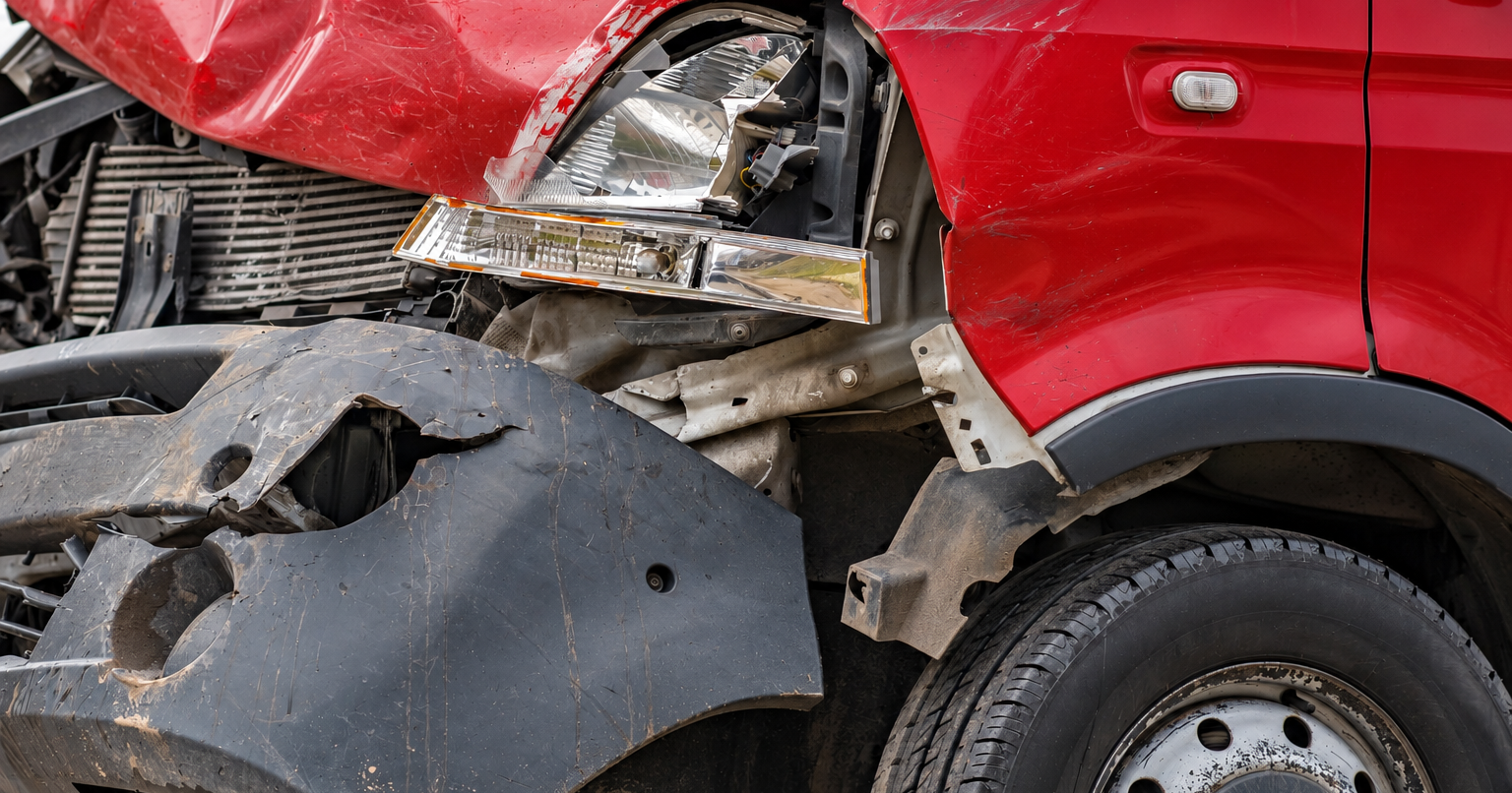
A broken headlight gives you something obvious to put on the repair list. A shifted axle or a stretched wiring harness may not. After a truck accident, visible damage is a starting point for the inspection, not a reliable measure of everything the impact affected.
At Mac’s Diesel & Trailer Repair in Lexington, KY, we encourage drivers and fleet managers to look beyond bodywork when discussing heavy-duty truck collision repair. A truck that starts and moves has not proved that it is safe to haul. The direction of the impact, what the wheels struck, and what happened to the trailer all help determine what needs closer attention.
The Impact May Reach Past the Damaged Panel
A bent step or torn fairing may sit beside damaged brackets, mounts, or lines. Force can travel through connected parts, and a component does not have to break completely to become a problem. A small crack at a mount may be hard to see until the surrounding area is accessible.
We recommend describing the whole event, including a curb strike during evasive steering or a hard jolt through the coupling. Photographs can help document what happened when they can be taken safely. They cannot rule out hidden damage, though. Do not take a truck onto the highway as a way of finding out whether the impact affected its handling.
Frame and Cab Mounts Need a Closer Look
Frame rails and crossmembers can be bent, twisted, or cracked without a dramatic change in the truck’s appearance. Shifted mounting points may affect axle alignment and driveline angles. Cab mounts can also be torn or displaced, leaving new rattles, poor door fit, water leaks, or movement that was not there before.
A visual inspection alone may not settle a structural concern. Measurements and repair decisions need to follow the manufacturer’s requirements, with qualified structural specialists involved where necessary. Straightening a panel does not establish that the frame underneath it is within specification. We recommend resolving that question before investing in cosmetic work that may have to come apart again.
Steering and Suspension Damage Can Be Subtle
A tie rod or drag link may be bent but still move. Steering-gear mounts, pitman arms, spring hangers, bushings, shocks, and axle attachments can take damage from an impact or curb strike. The driver may later notice a crooked steering wheel, wandering, a lean, or a ride that feels different.
Those symptoms deserve inspection, not just an alignment appointment made on the assumption that every part is sound. Damaged or loose components need to be addressed before alignment can be meaningful. Uneven tire wear after a crash is another clue, but we do not recommend waiting for a tire to show the problem. By then, the truck has already been operating with it.
Check the Air System and the Brakes Together
On an air-braked truck, impact can stretch hoses, crack fittings, bend chamber brackets, or damage valves and ABS wiring. Some leaks become more noticeable with movement or pressure. A quick listen while parked cannot replace the required brake-system checks and a qualified inspection of damaged areas.
Slow air build, abnormal air loss, a brake warning, or changed stopping behavior should keep the truck from returning to service until the concern is resolved. Hydraulic-braked heavy vehicles need checks of their hydraulic lines, hoses, fluid leaks, and related components instead. We would not treat the two systems as interchangeable or use one system’s checklist to clear the other.
Front-End Damage Can Become a Cooling or Power Complaint
A front impact can affect the radiator, charge air cooler, A/C condenser, fan shroud, and their mounts. A cooler may have a small leak that only becomes evident during testing. A cracked bracket may let a hose rub where it never touched before. Either way, the damage can be less obvious than the hood around it.
Coolant loss, higher operating temperatures, or reduced power after an accident belongs in the repair discussion. Charge-air leaks can affect boost and engine performance; cooling-system leaks can lead to overheating. We recommend checking nearby lines and clearances along with the damaged assembly so replacing one part does not leave another rubbing against it.
Wiring and Driver-Assistance Equipment Belong on the List
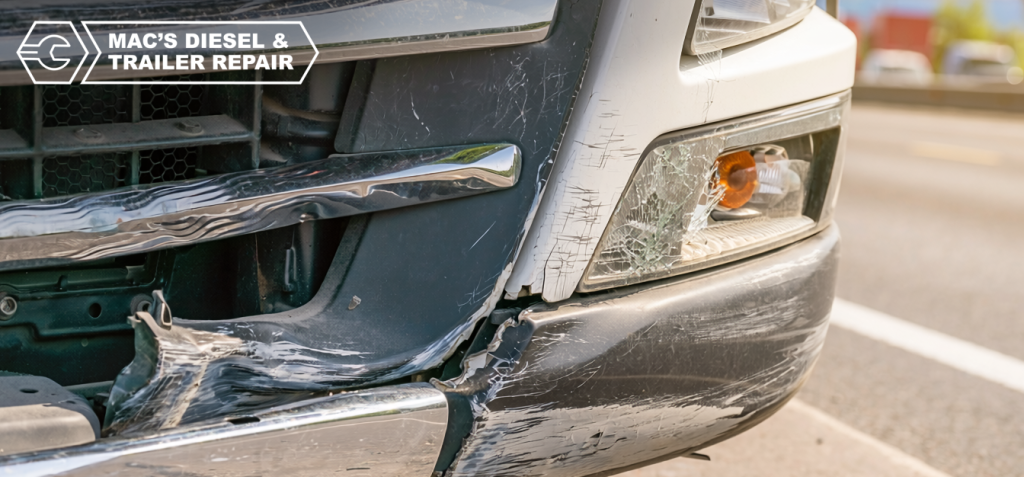
A pinched harness, pulled connector, or damaged ground may cause an intermittent fault rather than a complete failure. Lights can work during one check and fail when damaged wiring moves. Diagnostic work should follow the affected circuits and symptoms, not assume every new warning needs a new module.
For trucks equipped with cameras, radar, adaptive cruise, or collision-mitigation features, the manufacturer may require calibration after specific impacts or repairs. Replacing a bracket or moving a sensor can matter even when its housing looks intact. Ask who will perform any required calibration and how it will be documented. We do not want a cleared warning light mistaken for proof that every safety system is working correctly.
Inspect the Trailer and Coupling as Well
The tractor is only part of the combination. The fifth wheel, mounting hardware, kingpin, and trailer apron may have taken loads that damaged or shifted them. Trailer rails, crossmembers, suspension, axles, landing gear, and doors also need attention according to the incident. A trailer that no longer sits or tracks normally needs an explanation.
Cargo movement can add another problem even when the outside looks fairly untouched. Damaged securement, a distorted floor, or a shifted load needs to be addressed safely before hauling resumes. We recommend including trailer findings in the repair plan so they are not lost while everyone focuses on the tractor’s front end.
Make the Repair Plan About More Than Appearance
A useful collision assessment ties structural, mechanical, brake, and electrical findings together. Keep the inspection results and repair documentation with the truck’s records, including any required measurements or calibrations. The goal is a supported return-to-service decision, not simply a truck that looks repaired.
If your truck has been in an accident, call Mac’s Diesel & Trailer Repair in Lexington, KY at (859) 433-4062 to discuss an inspection or repair assessment. Tell us where the impact occurred and what has changed since. We can start that conversation with the damage you know about and the questions that still need to be answered.