
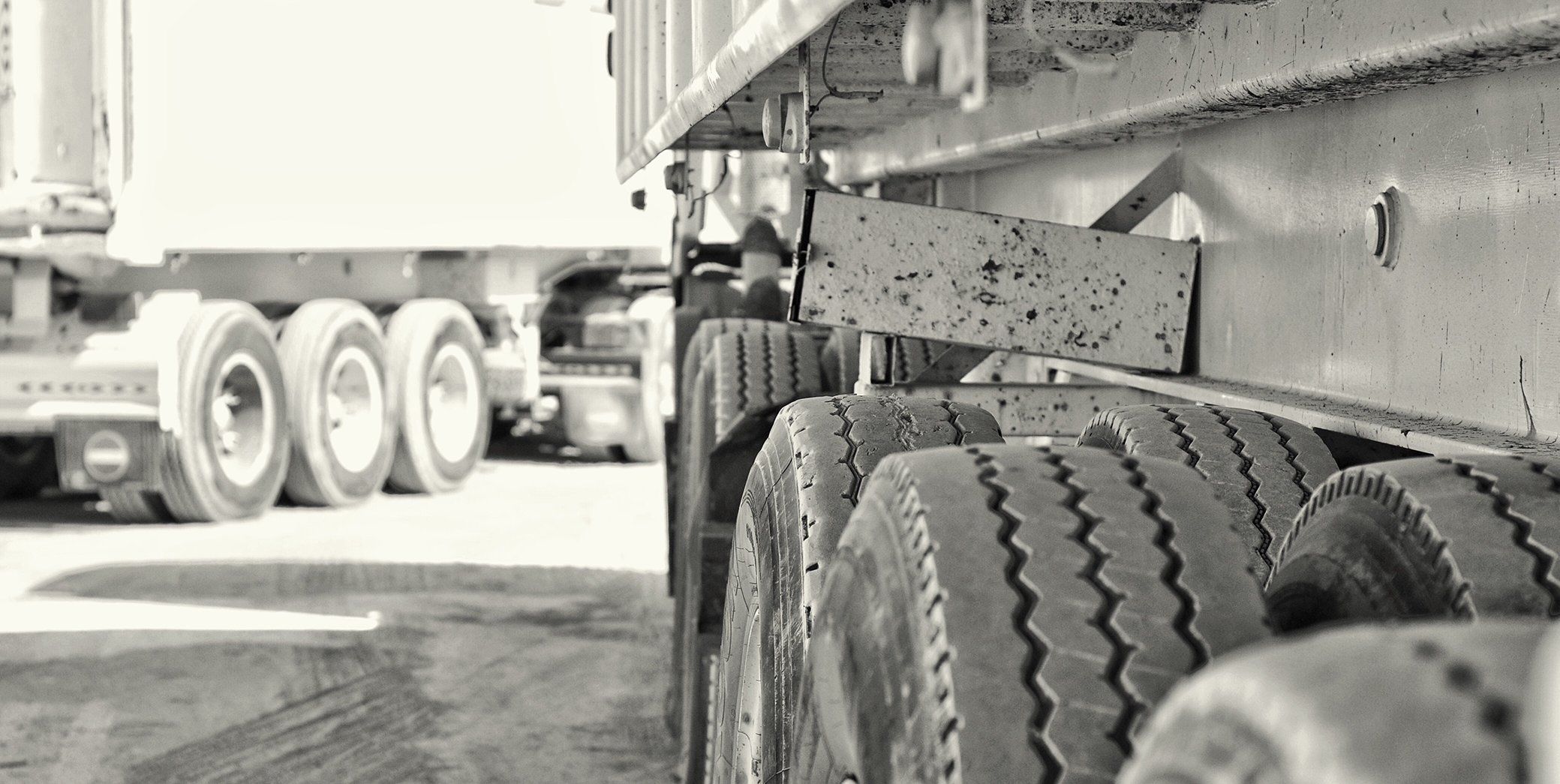
Identifying the “rib depression” tire wear pattern is a very critical aspect of effective semi truck maintenance. This distinct wear pattern looks like a big depression or indentation on the ribs of the tire, usually on the side of the center tread section. If you notice these typical grooves running in the circumferential direction of your tire, you’re staring at an unmistakable sign that there’s a problem with the mechanics of your truck or with tire pressure management.
The significance of recognizing this wear pattern cannot be overstated in the world of diesel repair and semi truck repair. These depressions don’t just appear overnight – they develop gradually as underlying issues persist, making early detection your first line of defense against expensive repairs down the road.
- Catching rib depression patterns early allows you to:
- Prevent catastrophic tire failures that can cause fatal blowouts
- Prevent expensive emergency roadside repairs that interrupt your operations
- Keep your fuel efficiency at maximum by addressing mechanical faults prior to them turning into expensive repairs
- Comply with DOT safety standards
Recognizing these patterns early on means you can drive your truck more safely as soon as repairs can be done!
Understanding Rib Depression Tire Wear Pattern
Rib depression wear appears as distinct depressions or grooves that develop along the tire ribs outside the center tread area. Unlike normal wear patterns that affect the entire tread surface uniformly, this specific pattern creates noticeable indentations that run parallel to the tire’s circumference. You can recognize this wear by examining the outer ribs where the depressions appear deeper than the surrounding tread areas.
Visual Characteristics of Rib Depression Wear
The visual characteristics of rib depression wear include:
Uneven depth variations across the tire’s width
Pronounced grooves along the shoulder ribs
Irregular tread contact with the road surface
Asymmetrical wear patterns between the inner and outer tire edges
Causes of Rib Depression Wear
There are several reasons why this degrading wear pattern appears on your semi truck tires.
Incorrect pressure: This is the main culprit, either when the tires happen to be under-inflated or over-inflated. Under-inflation leads to excessive flexing of the tire sidewalls, with the result that it produces excess heat and results in uneven contact against the road surface. Over-inflation puts all the vehicle’s load onto the center tread, with the result that it produces an irregular contact pattern by the outside ribs
Mechanical malfunction: Suspension, steering, and wheel assembly malfunctions introduce extra stress points that catalyze the development of rib depression
Misalignment conditions: These lead to tires operating at incorrect angles, which cause specific tread sections to absorb uneven loads when in use
These mechanical defects are compounded by the consequences of incorrect tire pressure, speed up the process of wear, meaning urgent tire repair intervention.
Causes and Prevention Alternatives to Rib Depression Tire Wear on Semi Trucks
The primary cause of these rib depression patterns on your semi truck tires is incorrect tire pressure. When tire pressure drops below factory specs, the tire sidewalls flex excessively during transport, and the outer ribs of the tire unevenly contact the roadway surface. This generates those characteristic depressions at the edge of the tire. On the other hand, overinflated tires place more weight on the center tread, but can also lead to uneven wear patterns when combined with other mechanical problems.
High tire pressure forces the tire to run primarily on its center section, reducing the area of contact with the road and creating stress points that can result in rib depressions when mechanical failure happens at the same time. The suspension system of your truck is crucial in this situation – worn shock absorbers, damaged springs, or failing bushings change how your tires touch the road surface, making pressure-related wear patterns worse.
Misalignment adds another layer of complexity to the formation of rib depressions. When your tires are out of alignment, they do not go straight down the highway. What happens is that tires scrub sideways while moving forward, leading to uneven wear across the tire surface. This scrubbing occurs only in the outer ribs, and it causes the patterns of depression visible when you inspect them.
Prevention Through Proper Maintenance
Your semi truck repair plan should be based on these practices:
Daily tire pressure check using a high-accuracy tire pressure gauge – keep manufacturer-recommended PSI values (usually 100-110 PSI for steer tires, 95-105 PSI for drive tires)
Weekly visual tire wear pattern check to detect early signs of rib depression
Monthly check of wheel alignment to confirm proper tire contact with the road surface
Quarterly suspension system check to detect worn items before tire damage is caused
Temperature changes have an observable impact on tire pressure – a 1-2 PSI change for a 10-degree temperature change. Keep this in mind when checking pressures seasonally or driving in areas with climates that vary.
Mechanical Causes of Rib Depression Wear
These repairs include locating the individual mechanical failures that cause these particular wear patterns. Your truck’s steering and suspension systems are responsible for providing correct tire contact with the road, and when these systems fail, rib depressions are indicative of more serious issues.
Classic Mechanical Causes
Worn shocks are among the most common reasons for rib depression patterns. If the shocks do not work to regulate wheel movement, your tires have too much oscillation and unreliable contact with the road. This creates the typical depressions along the ribs of the tire because certain areas are put under more stress than others while in use.
Defective steering components also contribute significantly to this pattern of wear. Worn-out tie rod ends, ball joints, or steering linkages result in wheels skipping and causing uneven tire contact. During your mechanical inspection, these components must be given special concern since they directly influence tire wear patterns.
Worn spring assemblies and defective suspension bushings also cause added instability that results in rib depressions. Simply put, if suspension parts cannot keep the wheels level while in motion, your tires will go through uneven and excessive wear.
Effect on Performance and Safety
Overlooked steering and suspension maintenance causes chain reactions of problems beyond tire wear. Your truck handles poorly, brake stopping distance is longer, and driver fatigue increases with repeated steering corrections. The mechanical problems compromise load stability and give the vehicle greater potential for accidents, making urgent repair a requirement for safe operation.
A Maintenance Approach to Avoid Rib Depression Tire Wear
Preventive maintenance is your first line of defense against expensive rib depression tire wear patterns. By using a system approach to servicing heavy-duty trucks, tire life can be greatly extended and unwarranted downtime minimized.
Daily routine checks – Inspect air pressure prior to each trip with an accurate gauge
Weekly visual walk-around – Inspect for early detection of rib depressions or abnormal wear patterns
Monthly wheel alignments – Schedule professional alignment checks to prevent irregular wear
Quarterly suspension assessments – Inspect shock absorbers, springs, and mounting hardware
The importance of on-time steering system repair and suspension cannot be overstressed. When you notice steering components wearing out or suspension parts becoming less responsive, fixing the issue the moment you notice it prevents the snowball effect that leads to rib depression patterns.
Your maintenance schedule should prioritize:
- Shock absorber replacement when dampening becomes ineffective
- Steering component lubrication to ensure proper operation
- Wheel bearing inspection to maintain proper wheel positioning
Regularly documenting tire pressure readings and maintenance activities helps identify patterns before they become expensive problems.
When to Seek Professional Semi Truck Repair Services
Even with diligent maintenance practices, certain situations require professional diesel repair expertise. Persistent rib depression patterns that continue appearing despite maintaining proper tire pressure indicate deeper mechanical issues beyond basic maintenance capabilities.
You should contact qualified technicians when:
Recurring rib depressions appear within weeks of tire rotation or replacement
Multiple tires across different axles show identical wear patterns
Suspension components produce unusual noises or vibrations during operation
The steering wheel pulls consistently to one side during highway driving
Alignment adjustments fail to correct ongoing tire wear issues
Advanced diagnostics are able to detect stubborn problems such as worn kingpins, twisted leaf springs, or malfunctioning shock absorbers, which produce these characteristic wear patterns. Trying to fix them without specialized tools usually results in makeshift repairs and ongoing tire wear.
Mac’s Diesel and Trailer Repair: Your Trusted Partner in Semi Truck Maintenance Needs
When identifying rib depression tire wear patterns, it becomes a priority for your fleet to find professionals who understand the complexities of heavy-duty trucks. We at Mac’s Diesel and Trailer Repair bring decades of expertise directly to your location through comprehensive onsite truck repair services.
Our truck diesel mechanics can spare you the inconvenience of having your truck towed to a repair shop. We arrive with professional-grade equipment and diagnostic tools ready to handle everything from regular maintenance to complex repairs at the very spot where your truck is located. This saves you precious time and minimizes downtime operations.
Comprehensive Service Portfolio
We at Mac’s Diesel and Trailer Repair offers an extensive range of services designed to keep your heavy-duty vehicles operating at peak performance:
Bus & RV repairs for commercial and recreational vehicles
DOT inspections to ensure compliance with federal regulations
Emergency roadside assistance for unexpected breakdowns
Preventive maintenance programs tailored to your fleet’s needs
Expert Diesel Mechanics in Lexington, KY
Our team of highly trained diesel mechanics serves Lexington, KY, and surrounding areas with exceptional semi truck repair solutions. Each technician possesses extensive experience diagnosing and resolving complex mechanical issues that contribute to tire wear patterns like rib depressions.
Don’t see your specific repair needs listed? Contact us today to discuss your requirements. We’re equipped to handle specialized maintenance tasks that keep your trucks road-ready and compliant with safety standards.
Ready to schedule? Book an appointment for any of our various heavy-duty truck services and experience the difference professional expertise makes.
Choose Mac’s Diesel and Trailer Repair
The moment you see those telltale depressions on the ribs of the outside of your mid-tread, take quick action! It will prevent small things from turning into inflated costs. Regular inspections of tire pressure, immediate fixes for mechanical problems, and proper wheel alignment all work their part in achieving the maximum life for the tires and reducing operating expenses.
Your truck’s performance depends on catching these wear patterns early. Ignoring rib depression signs leads to:
- Premature tire replacement costs
- Potential safety hazards during operation
- Decreased fuel efficiency
- Increased downtime for repairs
For expert tire wear analysis or routine maintenance service, contact us at Mac’s Diesel and Trailer Repair at (859) 433-4062. Our professional diesel mechanics know all the ins and outs of semi truck maintenance and provide stress-free solutions that keep your fleet in tip-top working condition.
Don’t be held back by tire problems. Book semi truck repair services today and ensure that your trucks are given the professional attention they deserve for peak performance and safety.