
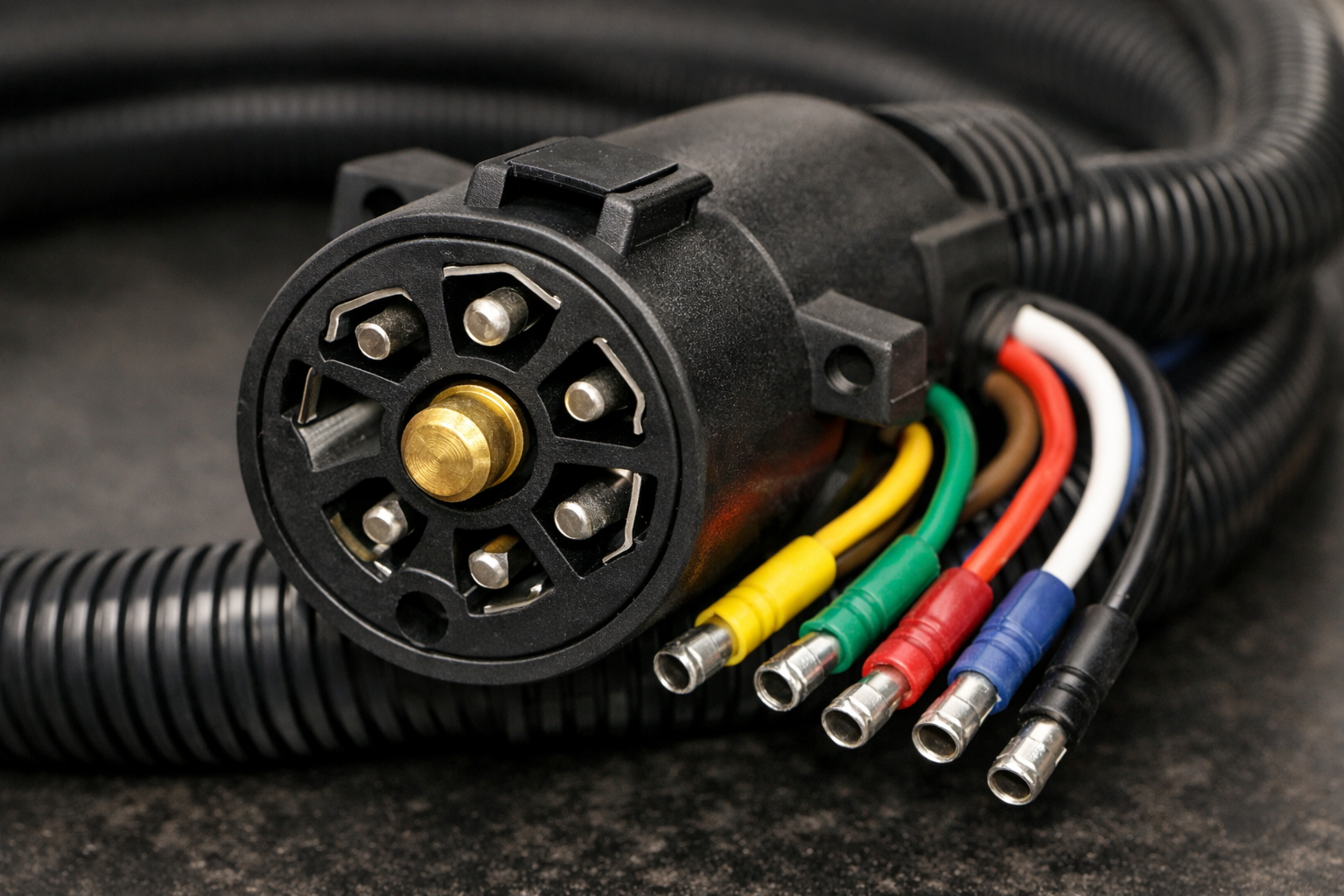
If you run a semi trailer for a living, wiring issues are the kind of “small” problem that can ruin a whole day. One bad ground can make your ABS light pop on, your turn signals go weird, or your brake lights disappear at the worst time. Then you are stuck chasing a fault that feels random, burns hours, and sometimes turns into a roadside repair you never planned for.
At Mac’s Diesel and Trailer Repair, we treat trailer wiring like what it really is: a reliability system. When it is done right, it is boring in the best way. Lights work every time, ABS stays happy, inspections go smoother, and you stop losing time to electrical gremlins. This guide breaks down what proper semi trailer wiring looks like, where failures usually start, and how we approach diagnostics and repairs so you get back on the road without guessing.
Why Trailer Wiring Problems Keep Coming Back
Most repeat wiring problems come down to two things: bad connections and bad protection. Trailers live in water, salt, vibration, heat, and constant movement at the nose box and axle areas. Even a “good” repair can fail quickly if the harness is left unsupported, connectors are not sealed, or the ground path is weak.
A common real-world pattern looks like this. Someone replaces a pigtail or fixes a light, it works in the yard, and then a week later it is back. The repair might have been fine electrically, but the wire was routed where it flexes too much, the loom was torn, or corrosion was already working inside an old connector. The result is downtime that keeps repeating until the underlying causes are handled.
The Most Common Failure Points We See
Trailer wiring usually fails in predictable places, especially on fleets that run in rough weather or drop and hook frequently.
The Nose And 7-Way Connection Area
The front of the trailer takes a beating. The 7-way plug gets dragged, twisted, slammed into holders, and exposed to road spray. Inside the nose box, wires can rub against sharp edges or get pinched. If the strain relief is missing or loose, the conductors fatigue and break internally, which is why some faults “come and go” when the cord is moved.
Grounds That Are Technically There, But Not Good
A weak ground causes some of the strangest symptoms. Lights backfeed through other circuits, markers glow faintly, turn signals flash fast, and ABS can throw intermittent faults. A trailer can “have ground” and still not have a clean, low-resistance return path. Paint, corrosion, loose hardware, and frame rust all turn a ground connection into a resistor over time.
Splices And Quick Fixes In The Harness
We understand why quick repairs happen on the road. The issue is when temporary splices become permanent, especially if they are not sealed or supported. A poor splice can wick moisture, corrode from the inside, and create voltage drop. That leads to dim lights, module issues, and blown fuses that look like shorts but are really resistance and heat.
Axle And Suspension Movement Areas
Near axles and sliders, the harness flexes constantly. If wires are too tight, unsupported, or routed where they get snagged, you will see broken conductors, chafed insulation, or intermittent ABS sensor wiring issues. This is also where we find loom worn through from vibration or rubbing on brackets.
LED Light And Module Connections
LED lights draw less power, but they are not immune to wiring problems. Corrosion at the connector, water inside the housing, or a compromised ground will still cause failure. On some setups, a failing connection can also create odd behavior like flicker or strobe effects.
What “Done Right” Actually Means
Good trailer wiring is not just “the lights turned on.” Done right means the system is sealed, strain-relieved, properly grounded, routed safely, and tested under load. It should survive weather and vibration, not just pass a quick check in the lot.
At Mac’s Diesel and Trailer Repair, we focus on a few non-negotiables.
First, we aim for clean power and clean ground. If either side is weak, everything downstream becomes harder to diagnose and less reliable.
Second, we avoid repairs that create a new problem. For example, a splice that sits in a flex zone is asking to fail. A harness that is zip-tied tight to a moving component will break. Routing and support matter just as much as the electrical work.
Third, we test with purpose. A test light can tell you something, but it will not tell you everything. Voltage drop testing, continuity checks, and verifying circuit behavior with the right load saves time and prevents comebacks.
How We Diagnose Wiring Without Guesswork
Electrical troubleshooting gets expensive when it turns into parts swapping. Our goal is to confirm the fault, isolate the section, and fix only what needs fixing while making sure the root cause is handled.
Step 1: Confirm The Complaint And Recreate It
If a driver tells us the right turn signal cuts out on bumps, we try to reproduce that. Intermittent faults leave clues when you move the harness, flex the cord, or load the circuit. This also helps us avoid returning a trailer that “works right now” but fails again the moment it hits the road.
Step 2: Check The Basics Before The Deep Dive
A surprising number of issues come from the 7-way plug, corrosion in the receptacle, or a weak ground. We start with a visual inspection, connector condition, pin tension, and signs of heat or moisture. Then we verify power and ground integrity before going deeper into the harness.
Step 3: Use Voltage Drop Testing To Find Resistance
A circuit can show 12V on a meter and still fail under load if there is resistance in the path. Voltage drop testing tells the truth. It helps us find corroded connections, failing grounds, and damaged conductors without tearing the whole harness apart.
Step 4: Isolate Sections Instead Of Chasing The Whole Trailer
We work from the front connection point to the affected component, checking at logical junctions. If the issue is rear markers, we isolate the rear harness section. If ABS faults show up, we check the power, ground, and sensor circuits in the areas where movement and corrosion are most common.
Step 5: Repair With Longevity In Mind
Once we find the fault, we repair it in a way that lasts. That includes sealing, strain relief, abrasion protection, and routing that respects how the trailer moves.
The Wiring Practices That Prevent Downtime
This is the part that saves fleets money. The goal is not to “fix it again faster.” The goal is to stop the same problems from happening.
Weatherproof Connections And Proper Sealing
Moisture is the enemy. We use sealed connectors where appropriate and make sure any splice or connection is protected from water intrusion. Corrosion often starts where you cannot see it, and by the time symptoms show up, the damage is already moving down the conductor.
Strain Relief And Harness Support
A wire should not carry its own stress at the connector. If the pigtail or harness is hanging, tugging, or flexing sharply, it will fail. Support points, proper slack, and strain relief keep the conductors from fatiguing.
Abrasion Protection And Smart Routing
We route harnesses away from pinch points, sharp edges, and moving parts. We also replace torn loom and protect high-rub areas. When a trailer is in service every day, “good enough routing” becomes an eventual short.
Grounding That Is Built To Stay Clean
Ground points need clean metal contact, solid fasteners, and protection against corrosion. We also watch for trailers that rely on questionable ground paths through rusty hardware or painted surfaces. A dedicated, clean ground solution prevents a lot of weird lighting behavior and ABS headaches.
The Right Fix For Shorts And Blown Fuses
When a fuse blows repeatedly, it is tempting to throw in a bigger fuse or assume the last repair “didn’t hold.” We treat repeated fuse failures as a clear signal that a conductor is chafed, pinched, or exposed, or a component is internally shorted. We locate the short, repair the damaged section, and secure it so it cannot happen again.
ABS And Trailer Wiring: Where Fleets Lose The Most Time
Trailer ABS issues are often blamed on sensors first, but wiring and power supply problems are just as common. A poor ground, water in a connector, or damaged harness at the axle can trigger intermittent faults that come and go depending on vibration and weather.
When ABS lights appear, we focus on:
- Power and ground to the ABS module
- Connector condition and pin fitment
- Harness routing at axles and suspension travel points
- Signs of rubbing, stretching, or crushed loom
- Sensor leads and tone ring area issues when wiring checks out
That approach keeps us from replacing sensors that are not actually the problem.
What Drivers Can Check Before It Becomes A Roadside Repair
We never want drivers turning into electricians, but a quick routine check can catch early warning signs. If something looks off at the plug, cord, or nose box, it usually is.
Here are a few things worth watching during your walkaround:
- 7-way plug blades that look green, burned, loose, or bent
- Cord that is stretched tight on turns or rubbing on the catwalk
- Exposed wires, cracked loom, or dangling harness sections
- Lights that flicker when the cord moves
- ABS light that appears only after rain, wash, or rough roads
If you spot any of that, it is usually cheaper to address it early than to wait for a full failure.
When You Should Stop Patching And Rewire
There is a point where repeated repairs cost more than a proper rewire or harness replacement. If a trailer has multiple corroded splices, brittle wiring, recurring shorts, or constant light issues across different circuits, a clean reset is often the most reliable option.
We help fleets make that call realistically. If the harness is compromised in multiple zones, patching becomes a cycle. If the problem is isolated and the rest of the system is healthy, a targeted repair makes sense. Either way, we aim for the fix that reduces downtime over the next year, not just the next trip.
Let’s Get Your Trailer Wiring Reliable Again
Trailer wiring should not be a weekly surprise. If you are dealing with flickering lights, ABS warnings, blown fuses, or intermittent shorts, we can help you get it handled the right way so you are not back in the shop for the same issue next month. Call Mac’s Diesel and Trailer Repair at (859) 433-4062 and let’s schedule a wiring inspection or repair that keeps your trucks moving and your downtime under control.