
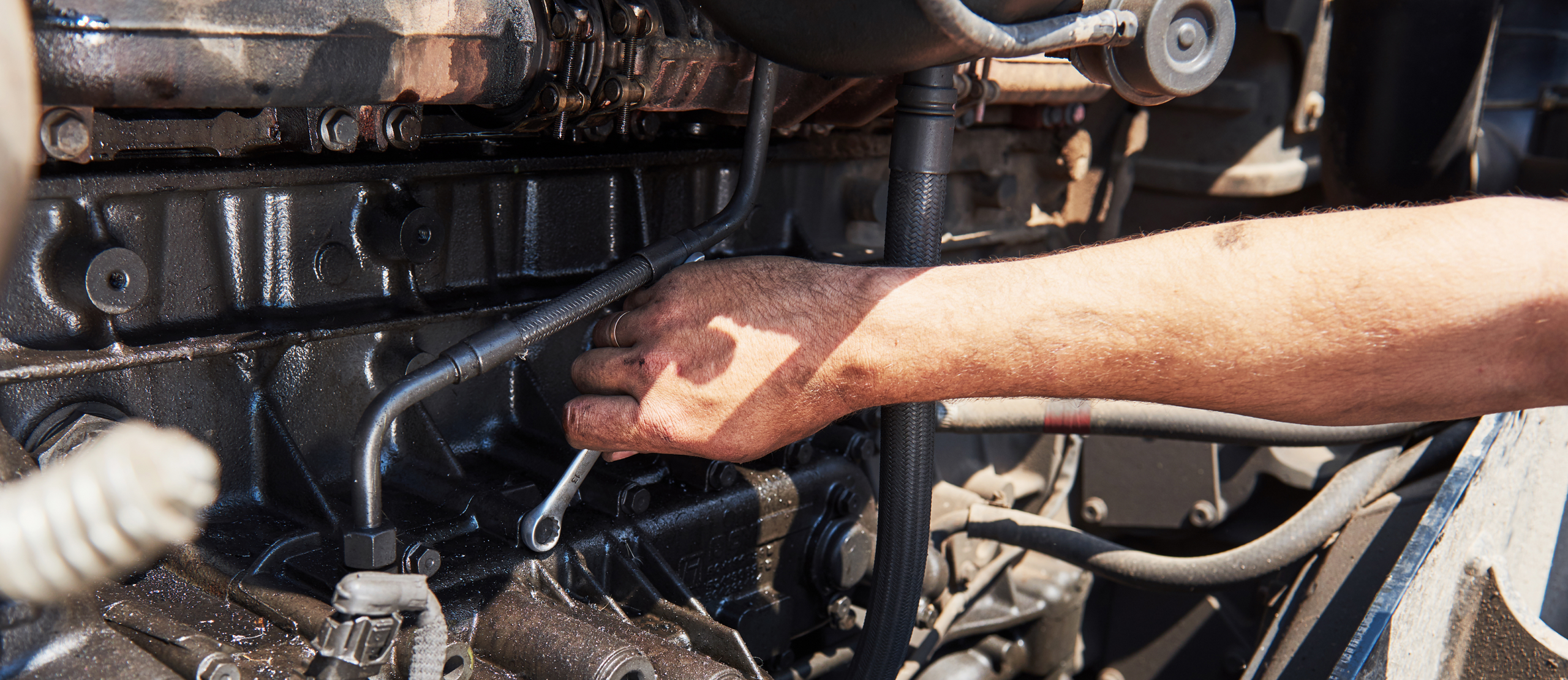
Engine replacement is a large undertaking that can give your truck a second chance at life. If it’s done correctly, it’s an investment that returns your truck to top shape and dependability. But, what if things don’t turn out so well?
An inefficient engine replacement can unleash a chain of unforeseen complications within your truck. Complications like these may vary from minor inconveniences to serious safety issues that impair the performance and operational efficiency of your vehicle.
Common Problems After Engine Replacement
Common post-replacement issues include:
- Power loss from misaligned components or improper calibration
- Engine misfires due to ignition timing problems
- Fluid leaks from damaged gaskets and seals
- Electrical complications affecting sensors and ignition systems
- Unusual noises indicating loose or misaligned parts
- Starting difficulties caused by compression issues
These issues can arise soon after replacement or build up over time. Knowing these issues in advance allows you to catch warning signs early and act to safeguard your investment.
1. Loss of Engine Power
There will be a substantial loss of engine power at replacement that may transform your truck from being a powerhouse to a slow truck. Loss of power is generally caused by two general sources: component misalignment and fuel system issues.
If your engine parts are not fitted correctly, in alignment, while being fitted, your performance truck is directly affected. Engine control unit (ECU) is at play here – unless tuned correctly to the level of your new engine, you will realize that your acceleration response is affected, pulling power is lost, and engine performance is unstable.
Fuel system problems give another set of power-sucking conditions. Your truck can be fighting clogged fuel injectors, preventing proper fuel delivery, a malfunctioning fuel pump that can’t supply enough pressure, and a dirty fuel mixture ratio that affects combustion efficiency.
These fuel system issues can really stifle your engine’s capacity to produce full power. Your fuel system, in good working order, guarantees that your engine gets the appropriate amount of fuel at the appropriate moment – when this ratio is awry, your truck performs poorly.
2. Engine Misfires
Engine misfires create a distinct problem after engine replacement – your truck runs rough and loses its smooth operation. This occurs when the air-fuel mixture is not ignited in the engine cylinders, causing your truck to misfire.
Three primary causes of engine misfires are often responsible:
Worn-out Spark Plugs: New engines require functional spark plugs to ignite the fuel mixture. Defective or poorly installed spark plugs interfere with proper combustion, causing misfires.
Wrong Ignition Timing: Fuel ignition timing is very important to engine efficiency. When the ignition timing is incorrect, the fuel mixture ignites at the inappropriate time, producing misfires and lower engine efficiency.
Fuel System Failures: A well-adjusted fuel system provides the correct amount of fuel to combine with air. Any disruption in this combination – from dirty injectors to fuel pressure leaks – can lead to misfires.
These misfiring symptoms often show up as:
- Rough idling
- Jerking motions during acceleration
- Loss of power
- Increased fuel consumption
- Check engine light activation
3. Fluid Leaks
After replacing the engine, you may notice fluid leaks in your truck, which can quickly become a serious problem. Here are the types of fluids you might see leaking from your vehicle:
- Engine oil
- Coolant
- Transmission fluid
- Power steering fluid
This seepage occurs due to busted or improperly applied seals and gaskets when changing the engine. In automatic-transmission trucks, one area one can check first is the seal of the torque converter – should it not be properly fastened or replaced if the engine has been swapped out, this allows for transmission fluid leakage.
Fluid leaks must not be underestimated – they can point to bigger installation problems that must be addressed urgently. Every kind of fluid serves a vital role in maintaining your truck in proper running condition:
Engine oil leaks can lead to insufficient lubrication
Coolant leaks risk engine overheating
Transmission fluid leaks may cause gear shifting problems
Power steering fluid leaks can make steering difficult
To catch these issues in their early stages, make it a point to inspect the bottom of your truck and where it sits on a regular basis. Puddles or spots of the same color as your truck’s different fluids can point out which system is malfunctioning.
4. Electrical Issues
Electric issues can arise at any time after installing the new engine on your truck. The new engine is equipped with high-end electrical connections, and there could be wrong wiring or misalignment, which will lead to a chain of complications.
Signs of Electrical Issues
Here’s what happens with electric issues:
Sensor Faults: Sensors on your truck can provide wrong inputs or refuse to talk to the engine control unit.
Starter Malfunctions: The engine won’t turn over or won’t even start.
Failure of the Ignition System: You may experience sporadic loss of power or full system shutdown.
Dashboard Warning Lights: Random illumination of warning indicators can signal electrical connection problems.
Common Causes of Electrical Issues
The reasons for electrical breakdowns following an engine replacement are most often brought about by improper wiring during installation, loose or corroded connections, and the installation of incompatible electrical components. The second most common offender is faulty grounding circuits, which lead to erratic system performance and disrupt the flow of electricity. These underlying causes have remedies that are required for your truck’s electrical systems’ reliability and performance following an engine replacement.
These electrical issues significantly impact your truck’s performance, from the mere task of starting the engine to intricate tasks controlled by the engine management system. Your truck may ride poorly, unevenly, or even experience total system failure if electricity issues exist.
5. Strange Noises and Starting Issues
Your truck might communicate with you through unusual sounds after an engine replacement, and it’s crucial to pay attention. These noises often indicate specific problems that need fixing:
Unusual Sound Indicators:
- Rattling or knocking: Points to misaligned components or loose engine mounts
- Squealing sounds: Often caused by loose or damaged belts
- Clicking noises: Can indicate problems with valve adjustments
- Grinding sounds: May signal bearing issues or improper gear mesh
Starting Problems
Starting issues represent another common challenge after replacing the engine. Your truck may be slow to start because of numerous underlying issues. Compression problems could be causing problems with engine performance, preventing the engine from firing properly. Loose or damaged spark plugs could also disrupt the ignition process, and a bad ignition timing is likely preventing your truck from starting properly.
Air-fuel mixture imbalance is also a strong possibility because a defective mixture will hinder combustion and cause starting problems. All these causes have to be addressed early to obtain consistent performance from your new engine installation.
These signs require immediate attention – ignoring them could result in more serious engine damage. A professional diagnosis can identify the exact problem and prevent potential long-term issues with your newly installed engine.
Importance of Regular Maintenance Checks After Engine Replacement
Regular maintenance checks are crucial after replacing an engine. They are a preventive solution to any issues that may come up. These checks are vital in identifying issues early, before they turn into costly repairs or dangers.
Below is what you need to put in your post-replacement maintenance process:
Daily Visual Inspection: Inspect for fluid leak, abnormal belt wear or loose parts
Weekly Performance Monitoring: Track fuel efficiency and power output
Monthly System Tests: Verify electrical connections and sensor functionality
Quarterly Professional Inspections: Have a qualified mechanic perform comprehensive diagnostics
If left unresolved, engine problems can have a significant impact on various aspects of your truck’s performance:
- Fuel economy
- Engine longevity
- Safety systems
- Operating costs
- Vehicle reliability
By discounting these factors, you are likely to be faced with poorer fuel efficiency, shorter engine longevity, compromised safety features, greater operating expenses, and uneven vehicle performance.
An engine-replacement truck that’s well maintained will ride smoother, be safer to drive, and continue running at the same quality. By following a formalized maintenance schedule, you maintain your investment and allow your truck to run as well as it can.
Choose Mac’s Diesel and Trailer Repair
Your truck’s health after an engine replacement depends on careful observation and prompt repair of any symptoms. Don’t delay seeking professional help at the slightest sign of power loss, misfires, leaks, or unusual noises – these problems can snowball quickly if neglected.
Here at Mac’s Diesel and Trailer Repair, our professional diesel technicians perform complete truck repair services, including engine overhauls and emergency roadside repairs. We take our service right to your doorstep through our mobile diesel repair service in Lexington, Kentucky, and the surrounding areas.
Would you like to maintain your semi-truck at its best levels? Call today at (859) 433-4062 and schedule an appointment with our experienced team for the best diesel repair and maintenance services.